
Who Owns a Maryland Property?
Start with the physical address. From there, identify the assessment account, then confirm the named party on the latest recorded deed. Maryland divides these duties between two systems. The State Department of Assessments and Taxation (SDAT) displays an owner field tied to the last recorded deed, while Maryland Land Records holds the legal instrument itself. A street address points to the parcel. It does not settle ownership on its own. When the title holder is an LLC, trust, or estate, treat the entity or probate record as a separate clue, then return to the deed for the property link. That loop keeps the deed as the anchor.
- Search the property’s county and situs address in SDAT Real Property Data Search; record the PAN and Owner Name.
- Use SDAT’s liber and folio or the owner name to locate the deed in Maryland Land Records.
- Read the latest grantee deed and match its legal description to the same parcel account.
- If an entity or estate appears, check the relevant Maryland business or probate record, then confirm the deed again.
A street address works equally well for a house lot or a tract of commercial land. A name-based hunt is different. SDAT's public property records search will not take an owner's name. Go through the deed index instead. When a match turns up, check it against the county, the parcel description, and the recording date. Verify everything before you trust the result.
Maryland Property Owner Sources
Each source answers one slice of the ownership question. A map pop-up is not a deed. Neither is a tax mailing address or a business filing. Read together, these property records cross-check one another, and the Circuit Court Clerk's Land Records index and instrument remain the title-facing sources.
| Source | What it contributes | Access and limits |
|---|---|---|
| SDAT assessment record | Owner Name, mailing and premises address, PAN, legal description and deed reference | Free statewide address/account search; no owner-name search |
| Maryland Land Records | Grantee, grantor, instrument type, date, liber/folio and deed image | Online index and images; account and current image terms apply |
| FINDER Online | Parcel point or polygon, map layers and account key | Map context; does not replace an owner or deed record |
| Business Express / Estate Search | Entity status and agents, or public probate index details | Explains a named company or estate; does not alone transfer title |
SDAT's parcel fields make the comparison easier. Owner Name may come back abbreviated. Mailing Address can differ from Premises or Location. Owners do not always live on the land. PAN ties the account to the tax roll. Legal Description spells out the parcel, and Liber/Folio points to the recorded deed in the deed records. A result may also list the seller, the transfer date, and the consideration. Treat all of it as clues to inspect, never as a legal opinion.
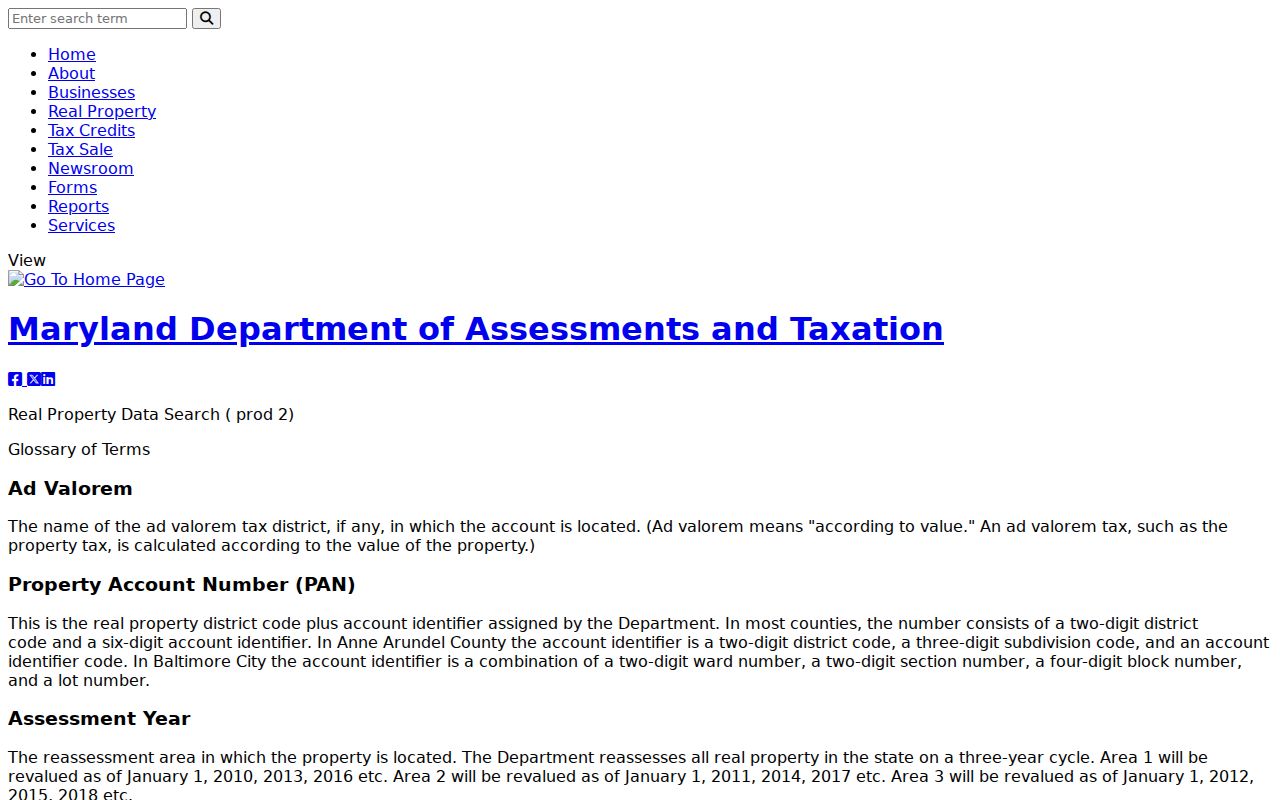
Skim that field glossary before matching a tax-record name against a deed party. In Maryland, the "owner of record" is whoever the document names. That person is not necessarily sitting inside the property.
Note: The table separates an assessment name from a deed transfer and the other records that may explain an entity.
Start With a Maryland Address
Pick the right jurisdiction in SDAT's statewide search before anything else. Choose the county or Baltimore City. Then enter the situs address, meaning the physical premises. Maryland never built one statewide street grid. County GIS or 911 staff assign addresses in unincorporated areas. Municipal planning or public works offices handle numbering inside town limits. The official local number can differ from what an owner writes down. Street names also cross county, city, and ZIP lines without ceremony.
A missed match usually means the address needs trimming. Drop the direction or suffix entirely. SDAT itself recommends leaving out terms like North, Southeast, Street, or Avenue. A shortened fragment with an asterisk widens the net considerably. Omit the street number and the search returns every record under that spelling. When the result seems right, open the local GIS or FINDER map. Confirm the location matches the parcel you had in mind.
Spelling staying stubborn? Skip the address. Use the PAN from a tax notice or map. Standard Maryland accounts combine a county code, district, and account identifier. Anne Arundel County appends a subdivision segment. Baltimore City instead runs ward-section-block-lot. Once the account appears, keep that PAN as the fixed thread tying address to deed. Never infer ownership from a street name that merely looks alike.
For location certainty, cross-check in FINDER Online. It maps an address or full account and draws the parcel point or polygon. That gives map context plus an account key. Feed the PAN back through SDAT for the owner field. The map does not promise an owner-name list for every parcel.
Read Maryland Owner Fields
SDAT's Owner Name field reflects the grantee on the last recorded deed. Sometimes only the first line displays. Abbreviations like ET AL, ET UX, T/E, or /WF appear often. ET AL can signal additional parties. So a shortened line is a cue to open the deed rather than assume a single holder. The grantee may be a trust, a trustee, or an LLC. That changes how the owner of record reads.
Two other fields answer different questions. Mailing Address is where assessment notices, tax bills, and official correspondence go. It might be out of state. It might be a post-office box, a trust or LLC address, or a representative's address. Premises/Location, by contrast, is the property itself. Mailing details show where notices travel but never prove where an owner lives. Likewise, a situs address tells you nothing about who occupies the building.
- Owner of record
- The party shown in an official ownership-related record, with the deed providing the recorded transfer.
- Grantee
- The party receiving an interest in a deed.
- Vesting
- The way the deed names how the grantee holds the interest.
- Situs / premises
- The physical property location used for assessment and addressing.
- Mailing address
- The destination for tax and assessment notices, which may be elsewhere.
Note: Preserve abbreviations in your notes until the deed image shows the full party names and roles.
Confirm a Maryland Owner Deed
The deed is the proof, and Maryland Land Records is where you confirm it. When SDAT points to a likely owner, carry that lead to the recorded instrument. The assessment page may list a book and page. Maryland calls that pair liber and folio. It takes you straight to the deed image. Otherwise search the name as a grantee. Narrow by county, party role, date and instrument. The portal offers a corporation/individual filter plus Soundex, Fuzzy and Contains options. These help with entity names and spelling variants. Keep one thing in mind. A person can appear as grantor, grantee, trustee or another party and still hold no current interest in the parcel.
Open the newest deed that matches the property. Read the grantee, legal description, recording date and clerk/book/page. Match the lot, block, subdivision or metes-and-bounds description against the SDAT record. A search result is only an index pointer. The deed image holds the actual instrument text. A mortgage, release, lien or easement is not the deed that names the current grantee. For the full document process, see Maryland deed records. Online access now runs through Maryland Land Records at its current portal. Account, two-factor and image-pricing terms can change. Check the Archives notice before relying on older steps.
Maryland LLC and Trust Owners
A limited liability company as grantee calls for one more step. Search the exact legal name in Maryland Business Express Entity Search. Use Business Name, Department ID or EIN. A public profile may list legal name, status, resident agent, principal office and filing history. Write the entity name exactly as the deed spells it. Keep the business ID handy so a similarly named firm does not confuse the trail.
Read the profile with care. A resident agent handles service and may be a hired service or third party. It proves nothing about membership or control. A principal-office address is not the situs of the land either. Active, good standing, forfeited, dissolved, merged and cancelled each describe a different entity state. Business Express can explain the company behind an owner of record. But its filing history cannot replace the deed or show who holds title to a specific parcel.
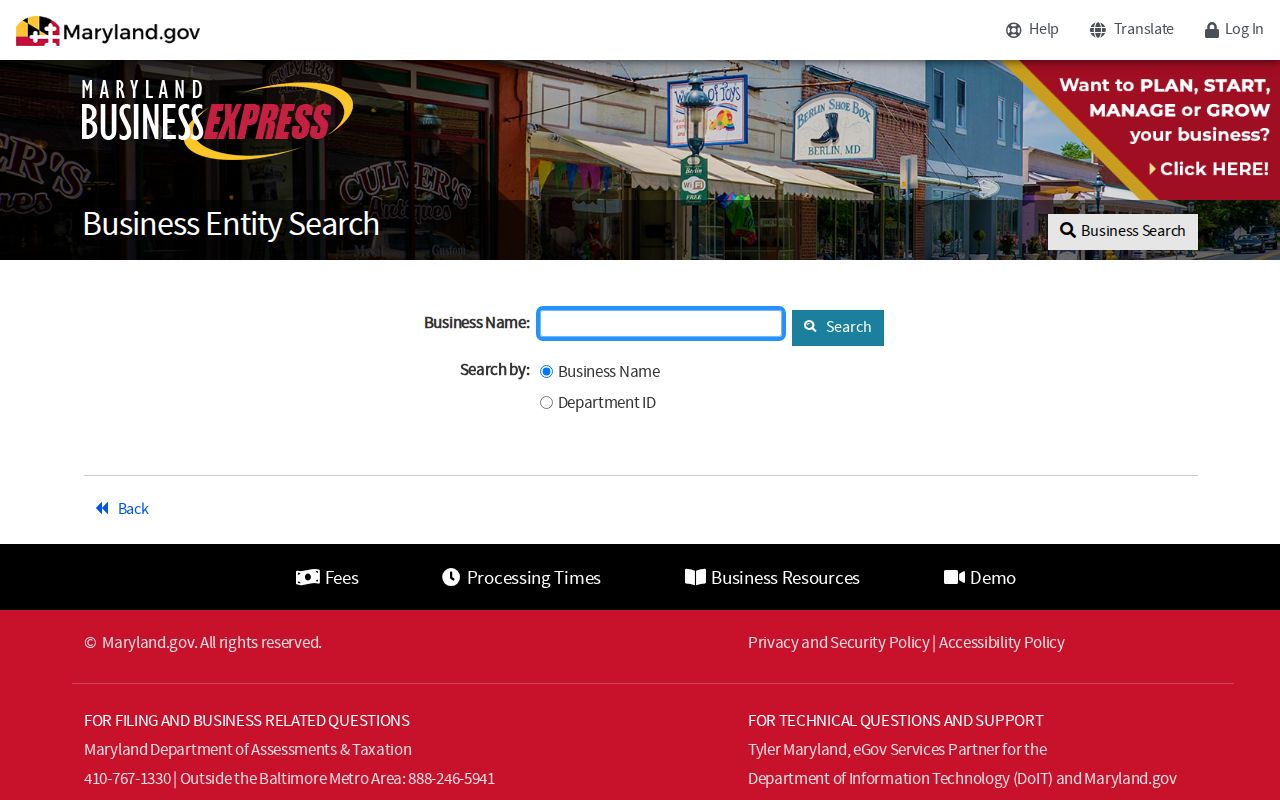
Trusts and estates add their own wrinkle. A trust may appear under the trust name or through a trustee. An estate may show as the Estate of the decedent or through a personal representative. These labels point to different records. None of them establishes that a named agent, trustee or representative personally owns the parcel in question.
Note: Business Express is an entity lookup, while the deed remains the source for title to a Maryland parcel.
Maryland Estate Property Transfers
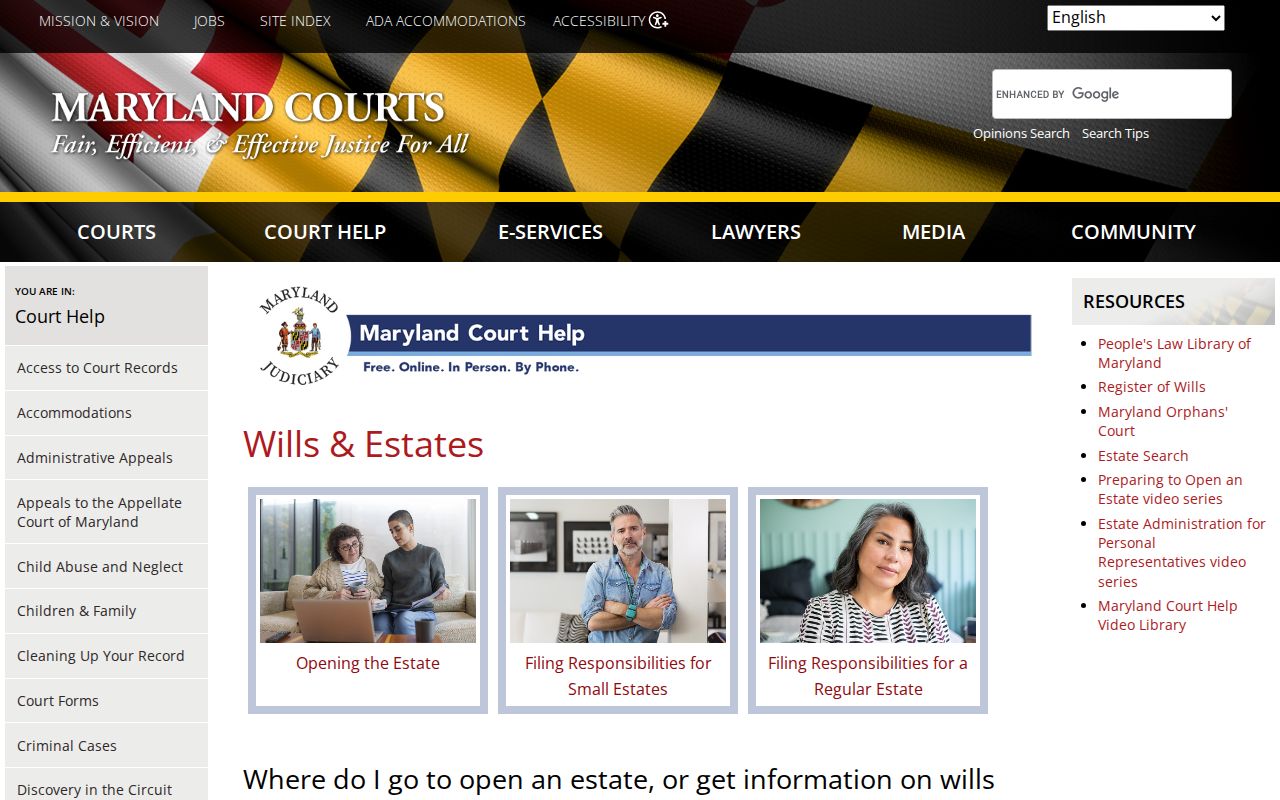
After an owner dies, the tax-roll name often lingers while the estate is handled. Search the Maryland Register of Wills Estate Search by decedent and county. Note the estate number, opened date, status and public representative information. The estate index is only a starting point. File access and copy rules vary by county Register of Wills.
Maryland Courts explains how probate administration manages property, claims and distribution. An inventory, account or distribution filing may identify a property. It may also establish authority to sell it. The title-facing change arrives later. It comes in an administrator's, personal representative's or distribution deed, or in another recorded instrument. A will expresses testamentary intent but does not replace a recorded deed. Match every estate document to the parcel number and legal description. Do this before treating it as the transfer record. The Maryland Judiciary probate page explains estate administration. It also points to each county Register of Wills.
A closed or disputed matter may live in the Circuit Court file. That record could hold a caveat, partition, quiet-title or sale-ratification case. A death certificate or obituary can help you identify the right estate, but neither document proves a property transfer on its own.
Maryland Owner Lookup Limits
An ownership lookup shows recorded and assessment facts, not who lives somewhere. It is not a title search. It is not a survey. It does not guarantee that no other interest exists. A name match can point to a different person. It might be a former grantee, a trustee or an entity. Compare county, parcel number, legal description, recording date and deed image before acting on any result. For the present owner field and roll timing, see Maryland current owner records.
Maryland's Online Data Privacy Act grants rights over covered personal data. Yet it does not erase public deeds, tax maps or SDAT's official owner field. Safe at Home, election confidentiality requests and court address-withholding or sealing forms protect qualifying records within their stated systems. No single request removes every property-related address, so do not assume otherwise. Avoid publishing personal details that are not needed to verify the parcel.
Scams travel with real property details. Maryland clerk warnings describe deed-copy mailers and phishing alerts designed to sell a costly profile or steal credentials. No single statewide alert portal exists. Go straight to SDAT, Maryland Land Records, the Register of Wills or the clerk's official page. The Maryland Courts directory lists clerk contacts. When online access fails, other paths still work. Courthouse terminals, phone calls and counter copies are options. Mail requests, the Maryland State Archives order service and a Public Information Act request are all workable too.
Use owner information lawfully. Public records support property research, estate work and due diligence. Do not use a name or address to stalk, threaten, intimidate or harass anyone.
Note: Compare official sources by PAN and legal description; do not publish personal details that are not needed to verify ownership.