
What Maryland Property Tax Records Show
Maryland splits the assessment record from the bill. SDAT keeps the property account, owner line, market and assessable values, assessment year, credit and exemption fields, and sale reference. It also stores the map number and special-tax details. Billing and collection work differently. Each county and Baltimore City finance office handles that job. So an assessment page will not tell you whether the latest bill was paid. For that, you need the local collector.
| Field | What It Shows | Where |
|---|---|---|
| Current market value | SDAT’s full-cash estimate as of the assessment finality date. | SDAT parcel page |
| Land and improvement values | Separate market-value parts for land and structures. | SDAT parcel page |
| Assessable / taxable value | Value after phase-in, caps, and applicable credits or exemptions. | SDAT parcel page and assessment notice |
| Homestead and other status | Application/status fields, exemption code, and possible recapture flag. | SDAT parcel page; SDAT credit office |
| Tax amount and payment status | Current balance, payment history, delinquency, or tax-sale status. | County or Baltimore City collector |
| Local and special charges | Jurisdiction, municipal tax, special-tax area, or district charge. | Local bill and collector |
Current market value is only an assessment estimate. It is not a listing price or an appraisal. Assessable value can run lower while a change phases in or a credit limits it. A recorded sale consideration is a separate field altogether. A family transfer, correction, or foreclosure deed can make that figure a poor guide to today's worth. For a bill balance, go to the local collector rather than reading the assessment roll as a payment record.
How Maryland Market and Assessable Values Differ
SDAT's current or total market value is a full-cash estimate. It applies as of the latest assessment finality date. Land and improvement values split the site from its structures. Assessable or taxable value is where the rules bite. Assessment phase-in, caps, and exemptions or credits all apply to that figure. When a reassessment raises market value, SDAT spreads the increase from the old market value. It does so evenly over three years. A homestead cap can further limit the yearly taxable rise on a principal residence.
The state's assessment material describes two methods. The cost approach estimates land plus replacement cost of structures less depreciation. The sales-comparison approach uses recent comparable sales. Neither turns an assessment into a current appraisal. The sale segment records reported consideration and transfer date, nothing more. Keep the assessment year, finality date, value level, and sale date separate. That discipline matters when you compare figures.
Search the Maryland Assessment Roll by Address or PAN
SDAT's statewide search is the entry point for the assessment record. You first pick a county and a search method. From there it accepts address, street, account, district, or map details. Two limits matter. The public portal does not search by owner name. It also does not host tax bills. When address spelling is uncertain, use the account number from an assessment notice. Keep the full PAN rather than shortening it, since Maryland formats differ by jurisdiction.
| SDAT field | What it narrows | Tax-record use |
|---|---|---|
| County selector | One county or Baltimore City | Required to open the local parcel account |
| Search-method selector | Address, street, account, or district/map route | Choose the key already known |
| Street address / number | Premises by house number and street fragment | Locate an assessment notice by situs |
| Property Account Identifier / PAN | Jurisdiction-specific assessment account | Carry the parcel key to the local tax bill |
| District and map reference | Assessment area and tax-map identifier | Use when the street or PAN is not at hand |
SDAT updates the search daily. Even so, a fresh deed transfer may take time to reach the assessment page. The PAN remains the bridge between a valuation notice and the right collector.
Find a Maryland Property Tax Bill by Local Collector
Note the SDAT PAN and premises address first. Then use the state directory of Local Tax Billing and Collection Offices to pick the collector for the right county or Baltimore City. Maryland has no single statewide bill portal. Local finance systems handle the amount due, payment history, delinquency, and tax-sale details. Their search tools and copy rules differ from place to place. SDAT may flag a special-tax area or municipal tax field. The collector's bill is still the place to confirm the charge and its status.
- Open the Maryland local tax-billing directory and choose the jurisdiction for the property.
- Search the local bill system with its accepted account or parcel key and confirm the situs address.
- Review current and prior bill years, payments, balance, and any local special-charge lines.
- For delinquency or a tax sale, ask that same collector about notices, certificate, redemption, or surplus-funds status.
- Market and assessable value
- Market value is SDAT’s full-cash estimate; assessable or taxable value reflects phase-in, caps, credits, and exemptions used for tax calculation.
- Levy or local charge
- The bill’s jurisdiction and special-area lines show the local charges applied to the account; compare them with the collector’s own detail.
- Homestead credit
- A principal-residence credit that limits the annual increase in taxable assessment; its status is not proof of who occupies the home.
- Tax lien
- A claim related to unpaid tax; confirm its current status with the local collector and, where recorded, the land-record or court file.
The SDAT local tax-billing directory routes an assessment account to its county or Baltimore City collector.
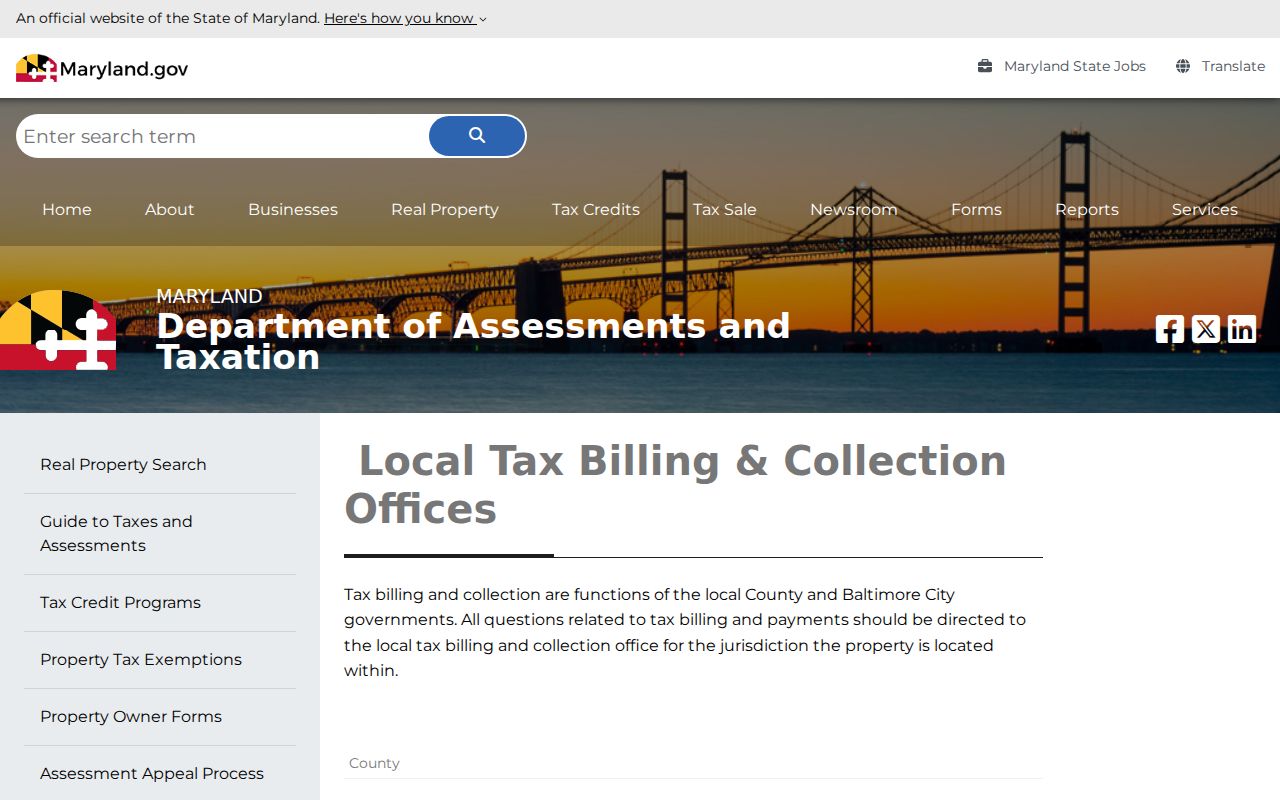
The directory is the handoff point: assessment is statewide, while bill collection and tax-sale records stay local.
Maryland Homestead Status Is a Separate Credit Record
The Homestead Tax Credit caps how much taxable assessment can rise in a year. It applies to a principal residence. Owners apply through SDAT's OneStop workflow, by mail, or by fax. The application status then appears on the parcel page. SDAT mails a new purchaser an application once a deed is recorded. The assessment record is updated as well. Check the account rather than assuming a change in ownership applied the credit automatically.
A homestead flag is a tax-status clue. It is not a deed. It is not an occupancy investigation, or proof of who lives at an address. If a bill seems to lack the credit, the SDAT Homestead Tax Credit application and status page covers eligibility, filing, and account status. The SDAT Homestead Tax Credit page shows the application-status route for a principal-residence credit.
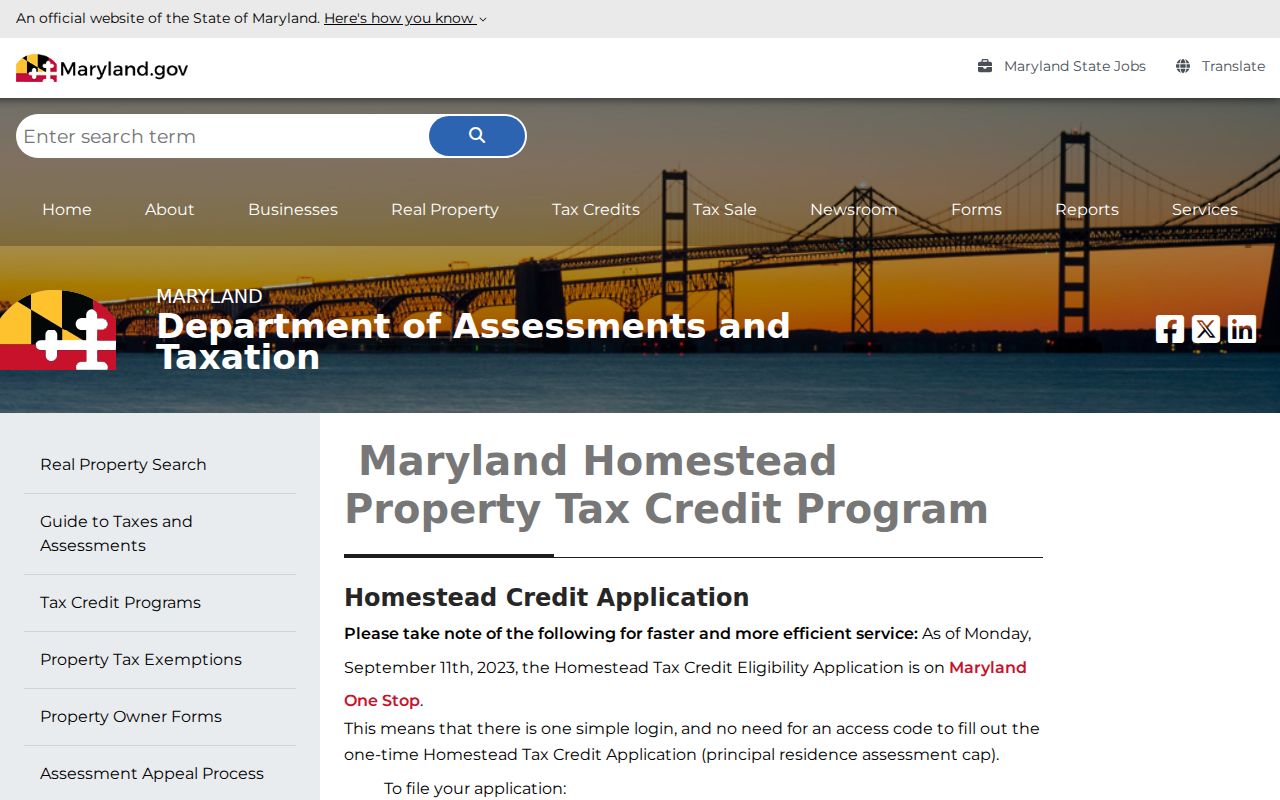
Once SDAT reviews an application, the status is public. Compare it against the parcel's taxable value and the local bill to confirm the credit took hold.
The 2026 Maryland Homeowners’ Property Tax Credit Form
Maryland runs a second relief program alongside the homestead credit. The Homeowners' Property Tax Credit caps the tax burden on a primary residence. It sets that cap according to household income. The 2026 form covers the applicant, a spouse or residential co-owner, the property account, other real estate, household members over 18, and income. SDAT keeps income details confidential. Never email them. Filing happens online or by mail. The program page lists the approved route and address.
The stated deadline is October 1, 2026. SDAT's own materials, though, point to April 15 as the practical target. The account PAN and the property address connect the request to the right tax record. Before sending personal or income details, check the current form. Instructions and program materials can change. The official Maryland Homeowners' Property Tax Credit page posts the current 2026 application and deadline.
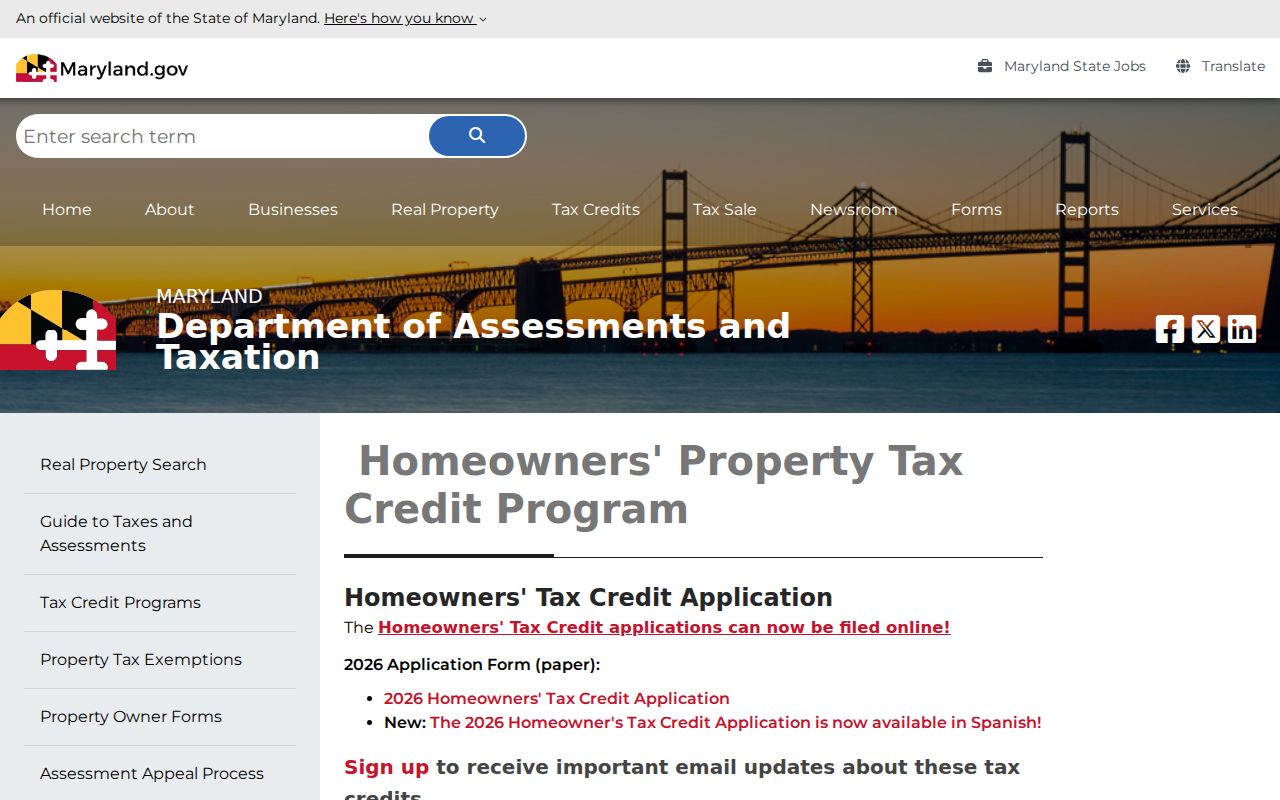
The credit application and the homestead application are separate programs. Review the correct form for the relief being claimed.
Appealing a Maryland Assessment
An assessment notice can look wrong. Start with SDAT's assessment appeal process and the deadline printed on the notice itself. The first appeal is due within 45 days of that notice. SDAT accepts a free appeal online or on paper. Its process page explains later petition-for-review timing and hearing options. Gather the notice, the parcel account, the relevant SDAT fields, and any supporting records. Keep them in one place. Comparing the property description against the assessment details before filing makes the dispute clear.
For help reading what the different value fields mean, see the Maryland property value guide.
Appeal window. File the first appeal within 45 days of the reassessment notice. The annual Petition for Review window and available hearing options are described by SDAT, so check the current notice and appeal page before sending a form.
The SDAT appeal process page outlines the notice deadline, review options, and hearing routes.
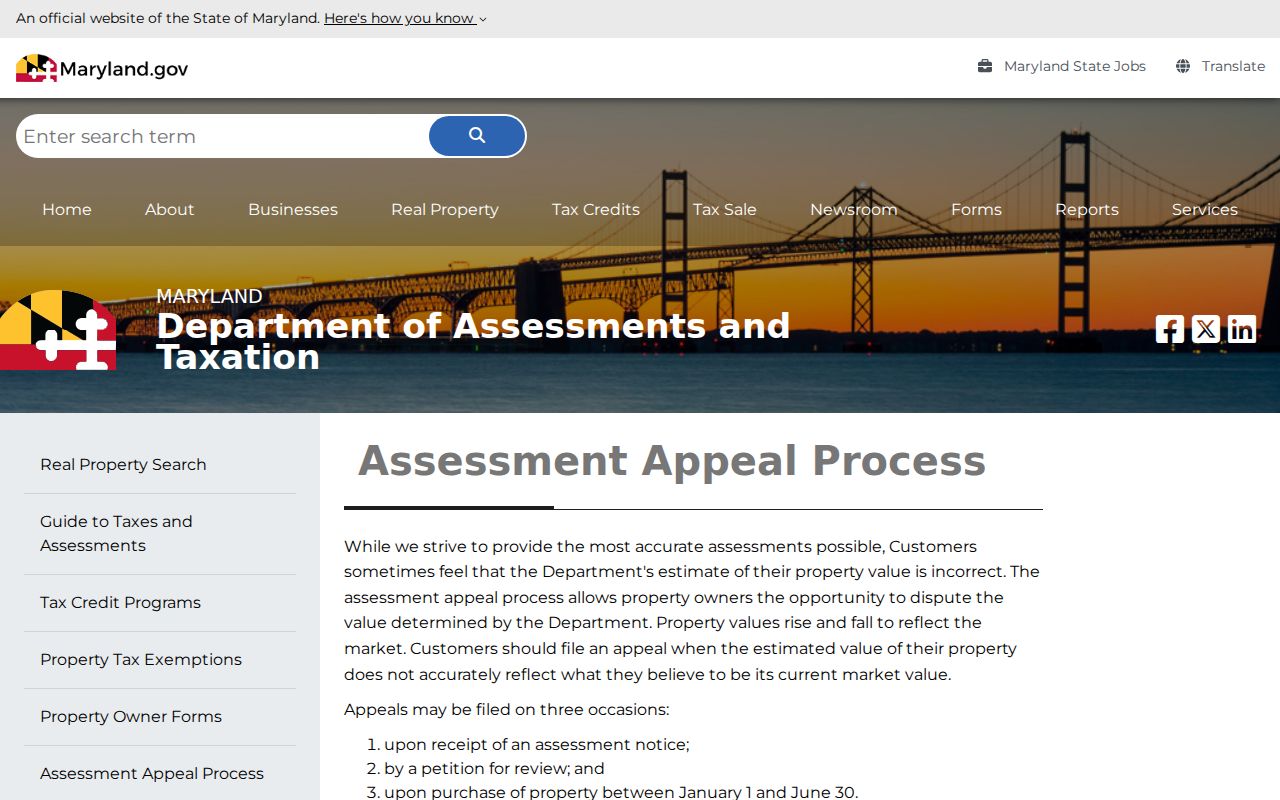
Confirm the correct filing method with the current notice and its linked page.
Maryland Special Tax Areas and Recapture Flags
SDAT parcel pages can carry a special tax area. They can also show a municipal tax, an exemption status, and special-tax recapture flags. Those fields explain why an assessment account may show more than a plain county line. The bill may show more too. A recapture flag might reflect an agricultural or use assessment ending. It might reflect a credit, rezoning, or forest-conservation treatment. It is a cue, not a payoff figure. Ask what rule applies and what amount appears on the bill.
Compare the assessment field with the district and charge lines on the local bill. If the account and the bill disagree, contact the proper assessment or finance office. Treatment depends on the parcel and the jurisdiction. So no status code implies a uniform statewide amount.
Maryland Delinquency and Tax Sale Records
Delinquency is a local collector's record. The county or Baltimore City office holds the current balance and payment history. The same office keeps the tax-sale notice, certificate, redemption status, and surplus-funds information. SDAT's value page cannot confirm whether a bill is paid. Once a property enters tax sale, the collector's account and notice come first. The State Tax Sale Ombudsman explains Maryland's local process and homeowner resources. It does not replace the account office.
A tax-sale certificate, a later court case about redemption, and a deed after a completed process are distinct events. Tie the local account number and parcel description to the Case Search docket. Tie them to the recorded instrument as needed. Deadlines, payment methods, and fees are local or case-specific. Confirm them with the collector before acting. Open the official Maryland Tax Sale Ombudsman information for statewide process guidance. Then follow the local bill portal for the individual account.
What Maryland Property Tax Records Do Not Prove
An assessment is not a current appraisal. A recorded sale figure is not always a market comparison. The tax bill is not the deed. A homestead flag does not prove occupancy. A recapture field is not a final amount due. Nor does the statewide assessment roll replace county or Baltimore City finance records. Those local offices hold payments, delinquencies, and tax-sale status.
Keep the assessment notice and the credit status distinct. The same goes for the bill, the parcel account, and any recorded lien or release. When two of them disagree, ask the office that keeps that specific record. Maryland property tax records work best for understanding assessed value and tax obligations. No single state page tells a parcel's full financial or legal story.