
Maryland Owner of Record
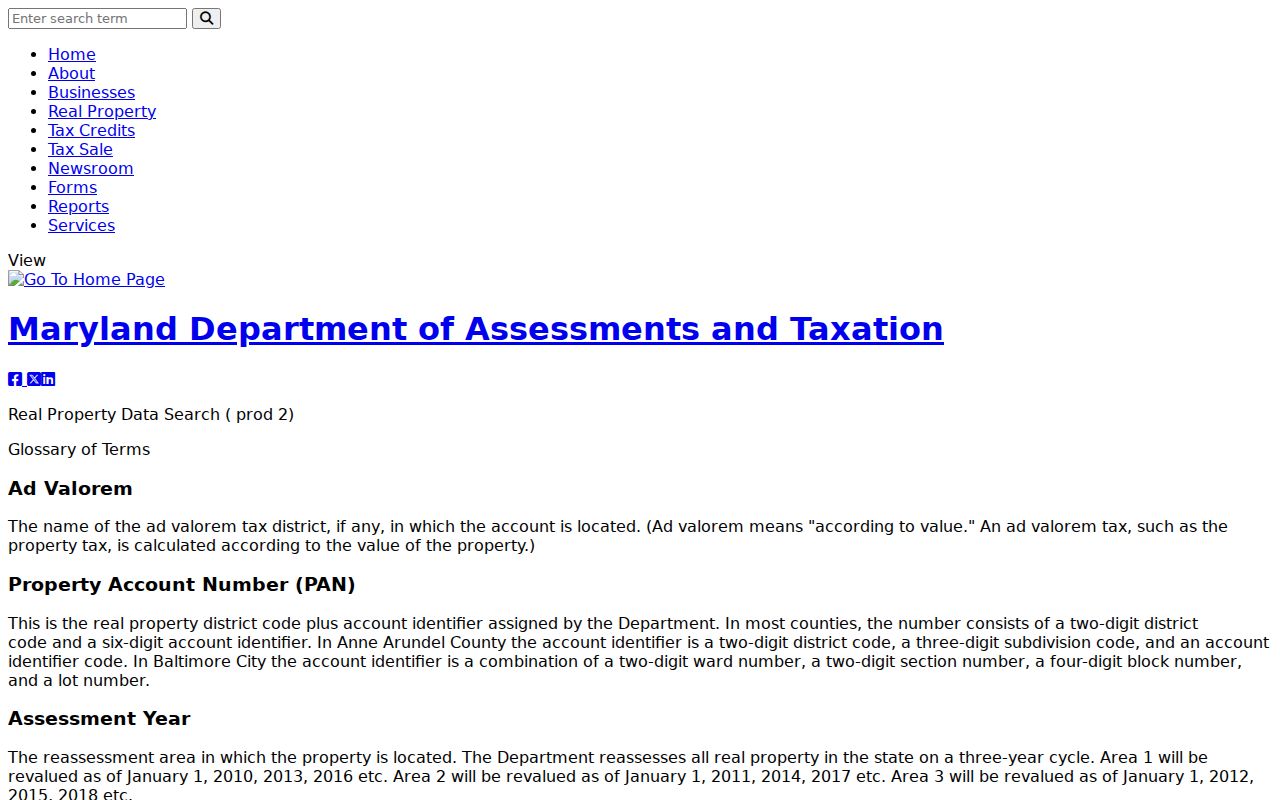
Maryland SDAT lists its owner in the Owner Name field. That entry mirrors the last recorded deed. The assessment page also shows the physical location, the mailing address, a property account number and a book-and-page deed reference. Read those fields together. A first owner line may stand in for others, and abbreviations like ET AL, ET UX, T/E or /WF only make sense beside the deed image. A recent transfer may not appear yet.
| Owner Name | Named owner from the last recorded deed; may show only the first line or an abbreviation. |
|---|---|
| Mailing Address | Address for assessment notices, tax bills and correspondence. |
| Location / Premises | Physical property location, which may differ from the mailing address. |
| Property Account Number | SDAT assessment key, with a county-specific format. |
| Liber / Folio | Land-record book and page tied to the deed reference. |
| Last Sale Date / Seller | Transfer segment fields to compare with the recorded instrument. |
Other fields add context. The same page carries the legal description, map number, sale consideration and sometimes a second deed reference. The glossary on SDAT’s real-property definitions page spells out what those labels mean. The record names an owner, not a resident.
Use the exact label and text SDAT displays when comparing the account against the deed. A tax field is not an occupancy claim.
How Fresh Is Maryland’s Owner Roll
SDAT updates its public Real Property Data Search daily. A daily refresh still is not a real-time deed index. A deed must be recorded first. Its information then travels to SDAT, and the assessment page updates afterward. The agency’s homestead material describes this order: a new purchaser receives an application only after the deed is recorded and SDAT’s records show the change. No fixed statewide count of days separates closing from a visible owner change.
Maryland publishes no statewide closing-to-roll lag. Timing varies by property and processing. A fresh sale can therefore surface in Maryland Land Records while SDAT still shows the prior owner. Record the deed date alongside the SDAT check date. If a later lookup differs, those dated notes explain the earlier page.
Transfer dates and seller fields add context. The owner of record is best confirmed against the newest recorded grantee deed. A daily update describes the portal’s cycle. It promises nothing about same-day posting.
Note: The daily refresh describes the portal’s update cycle, not a guarantee that every new owner appears on the same day.
Confirm a Maryland Owner Transfer
When the roll and a recent sale disagree, put the assessment account beside the actual instrument. Start in SDAT. Search by county, address or PAN, then carry the liber and folio into the matching book and page in Maryland Land Records. If that reference is murky, search the party as a grantee and narrow by county, recording date and property description. The index result points to an image. The recorded deed supplies the parties and terms. Address searches can miss. SDAT suggests dropping direction terms and street suffixes, or trying a truncated street name with an asterisk. Confirm any hit by PAN.
- Capture the SDAT Owner Name, PAN, Location/Premises, legal description and deed reference.
- Open Maryland Land Records and search the county by liber/folio or the likely grantee name.
- Read the newest matching deed’s grantee, recording date and legal description.
- Compare the deed’s parcel description and names with the SDAT account; note any gap without guessing its length.
- Owner of record
- The party the assessment page or recorded deed names for its own purpose.
- Vesting
- How the deed states the grantee holds the interest.
- Recording lag
- The variable interval between a transfer and its appearance in a public assessment display.
- Liber / folio
- The book and page where a land instrument is recorded.
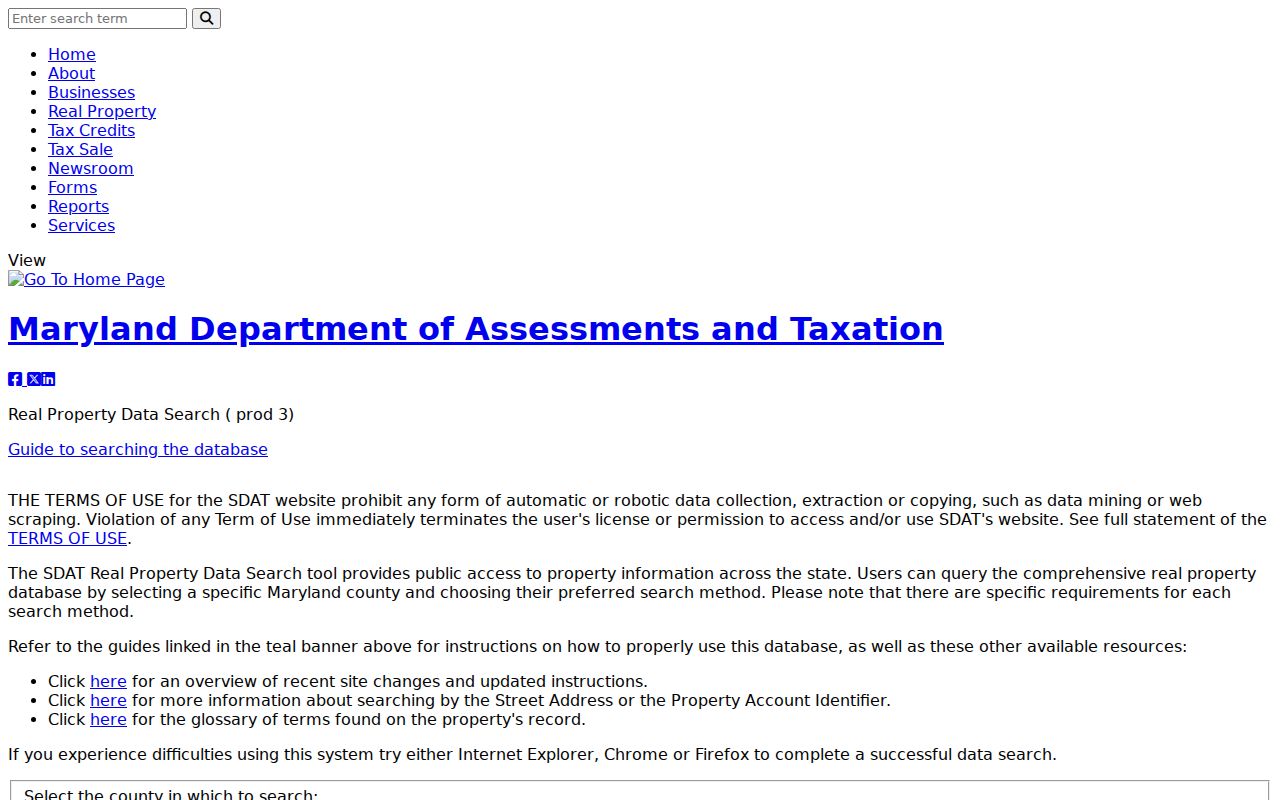
Two companion pages help. For an address-to-owner route, use the Maryland ownership lookup method; for deeds, see Maryland deed records; the live tool is SDAT Real Property Data Search. Match its account fields against the deed reference.
Recent deed, older roll. If a matching deed is newer than the SDAT owner line, use the deed’s grantee and recordation date as the more current recorded transfer while the roll catches up.
Mailing Versus Situs in Maryland
Mailing Address is where SDAT sends assessment notices, tax bills and other mail. Location or Premises is the land itself. A mailing address can sit in another state, a post-office box, an LLC or trustee address, or a representative’s office. Each of those is a valid record distinction. None signals a problem with the ownership entry.
For a present-owner question, start with the physical situs to confirm the right parcel was found. Treat the mailing field as the correspondence route only. A tax notice address can show whether notices go somewhere other than the land. It proves nothing about where a person lives. Likewise, a situs address never proves the owner occupies the property.
Maryland Owner Status Fields
A homestead flag on SDAT reflects an application for a principal-residence credit. That is tax-status information. It is not occupancy proof. Nor does it list everyone living at the address, since the assessment page names a record party only.
Other codes mark an account fully taxable or exempt at the state or county level. Those codes shape tax treatment. They do not name a different owner. They do not change the deed, so keep the owner line, exemption status and any credit flag as separate fields.
Maryland LLC and Trust Names
SDAT sometimes lists an LLC rather than a person. When it does, take the exact legal name from the deed. Enter it into Maryland Business Express. The entity search accepts a Business Name, Department ID or EIN. Its public profile shows status, resident agent, principal-office address and filing history. Where two entity names look nearly alike, match on the Department ID. Check the filing date along with current status.
A resident agent is just an entity's contact point. That role carries no ownership of the land. A principal office can differ from both the parcel's situs and the assessment mailing address. Trusts raise the same caution. A deed may name the trust directly or act through its trustee. The vesting language in the deed records states the legal capacity better than a Business Express profile ever will. Estate names and personal representatives can also surface while probate remains open. Read the current owner display against the latest deed and any estate transfer rather than assuming a will alone changed the assessment name.
Note: An agent or principal-office address identifies a business contact, not the owner or physical location of the Maryland parcel.
Maryland Owner Record Protections
Maryland's Online Data Privacy Act governs defined personal-data practices by covered entities. It does not strike public deeds or tax maps from view. The official SDAT owner field stays public as well. Safe at Home offers a substitute address for qualifying participants working with Maryland agencies. Courts and election offices run their own confidentiality procedures. Each tool has a narrow scope, and none automatically erases every land-record or property-tax address.
When a recorded document exposes sensitive personal details, use the clerk's redaction or sealing process. Do not repeat information the parcel does not need. An owner lookup serves property due diligence, estate work and lawful contact about the land. It reveals no occupant. It authorizes no intrusion.
Verify Maryland Owner Notices
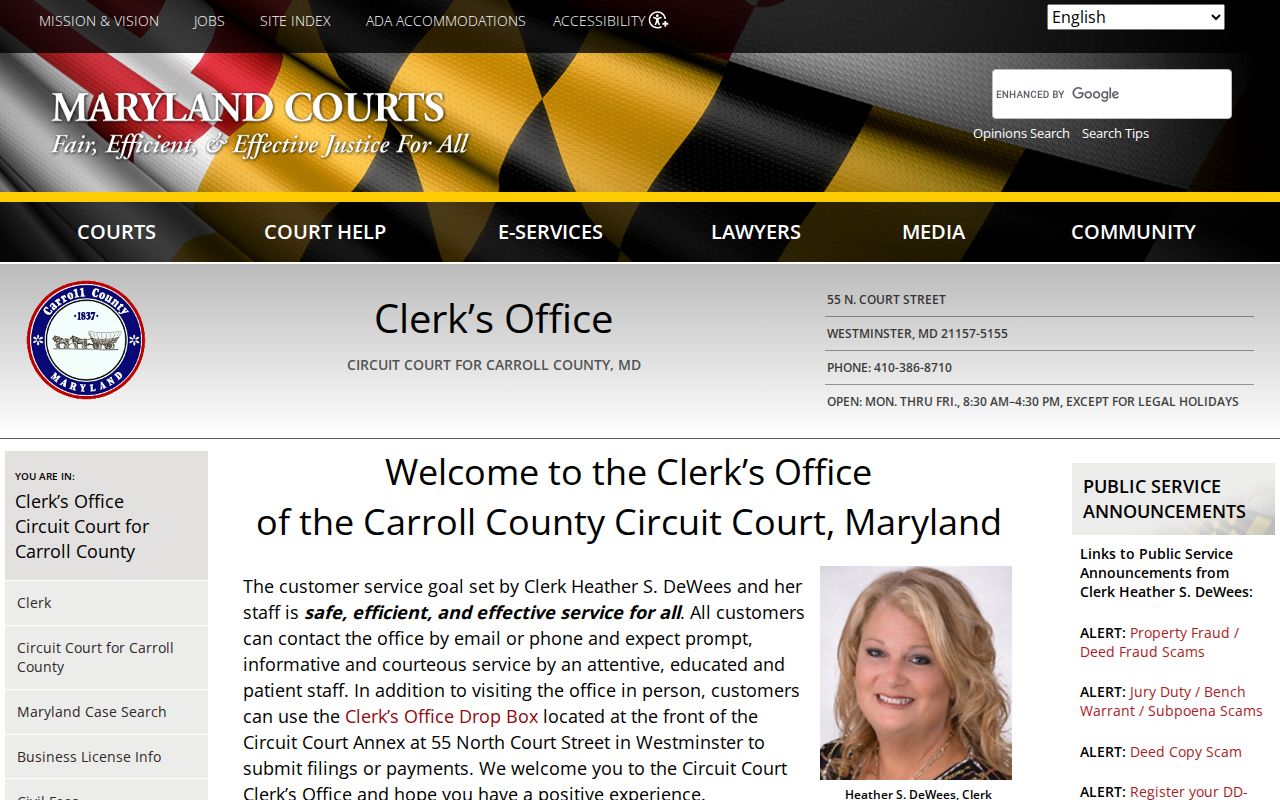
Maryland Circuit Clerk pages post warnings. They cover paid deed-copy mailers and phishing alerts dressed up with real property details. One letter may push a $99 property profile. A fake email may claim a sale and demand payment or login credentials. Before trusting a claimed transfer, open SDAT or Maryland Land Records yourself. Skip the mailer's QR code. Skip its link.
An official Maryland Circuit Clerk warning lays out these deed-copy and property-profile scams. Compare the parcel number, legal description and newest recorded deed. Then phone the clerk through the Maryland Courts directory number. That alert comes from a county clerk, not a statewide deed-alert service.
No deed image online? Options remain. Courthouse public terminals, the clerk's copy counter, phone and mail requests, Maryland State Archives holdings, or a Public Information Act request can each fill the gap. Assessment questions take a different path. Corrections and worksheets belong with the local SDAT assessment office, or with a request to a custodian for a public non-posted record. Neither route converts the owner field into a title opinion.
Who owns the property today? Anchor the answer to one parcel key held constant across the assessment and the deed record. Names shrink, addresses diverge and roll timing shifts. The account number, deed reference, legal description and record date give the comparison its footing.
Note: A clerk can point to a book-and-page reference but cannot perform a title search or give legal advice.